

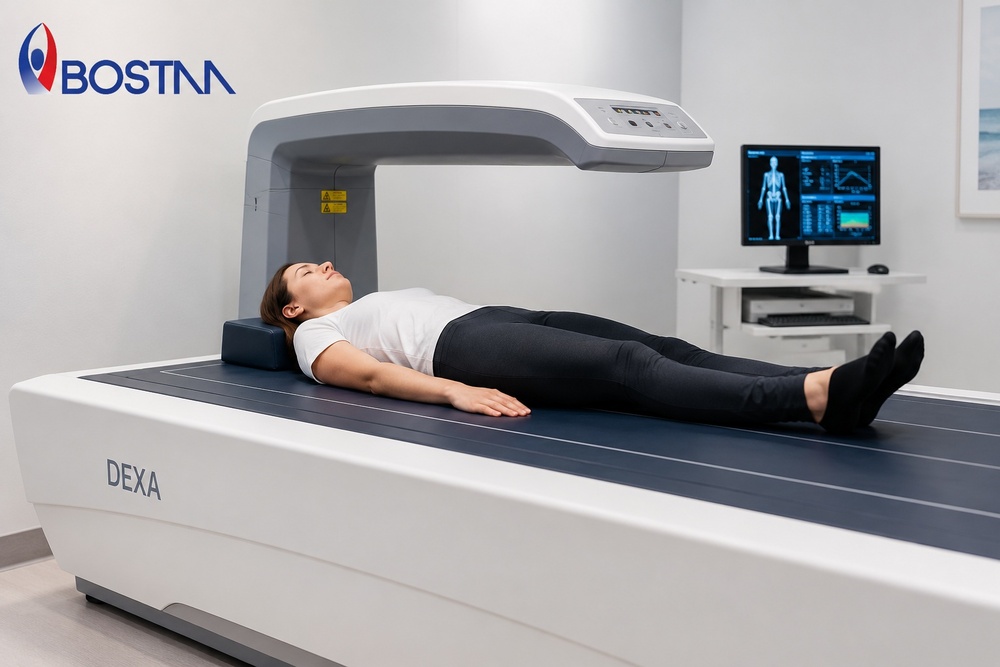
Dual-energy X-ray absorptiometry (DEXA) is a sophisticated and valuable tool for assessing body composition and bone health. However, its routine availability to the general public for non-medical purposes is not currently justified by the evidence.
While DEXA provides detailed measurements of fat mass, lean mass, and bone density, there is limited evidence that its use in otherwise healthy individuals leads to improved health outcomes or meaningful behavioural change beyond what can be achieved with simpler, lower-cost methods. Such methods include waist circumference, body weight tracking, skinfold measurements, and basic anthropometry. These can provide actionable information without the cost, complexity, or radiation exposure associated with DEXA.
Moreover, results are sensitive to factors such as hydration status, recent exercise, and food intake, increasing the risk of misinterpretation, particularly outside of specialist supervision.
Although the radiation dose from a single scan is low, it is not negligible. Widespread, repeated use at a population level raises concerns about cumulative exposure, especially when there is no clear clinical benefit. There is also a risk of psychological harm, including increased body image fixation or disordered eating behaviours, particularly when results are overemphasised or poorly interpreted.
BOSTAA acknowledges the use of DEXA scans in elite sport for the monitoring of athletes. While we suggest that normative values of T-scores and Z-scores within this specific population remain unknown and therefore are difficult to interpret as a single finding, monitoring of these scores may help the sports physician identify a trend in bone density. It is also an established practice within elite sport to use a DEXA scan to identify changes in body composition. The scan results are monitored appropriately by the sports medicine doctor who refers their patient / athlete for the scan. They in turn may act upon the result and it is proposed that such monitoring may prevent more significant injury for the athlete.
Similarly, clinicians use DEXA for monitoring bone density and body composition at at-risk athletes, such as menopausal marathon runners and triathletes. This is usually alongside nutritional and training regimens as part of for medical prevention of injury.
In summary, DEXA should remain a targeted tool used under professional supervision where there is a clear purpose and benefit. Its broad commercialisation for routine public use is not supported by current evidence and risks offering the illusion of precision without meaningful impact on health outcomes. Its use in the professional or elete athlete has a defined role and must be carried out by qualified individuals.